Improve Indoor Air Quality: Ventilation, Filters, Humidity
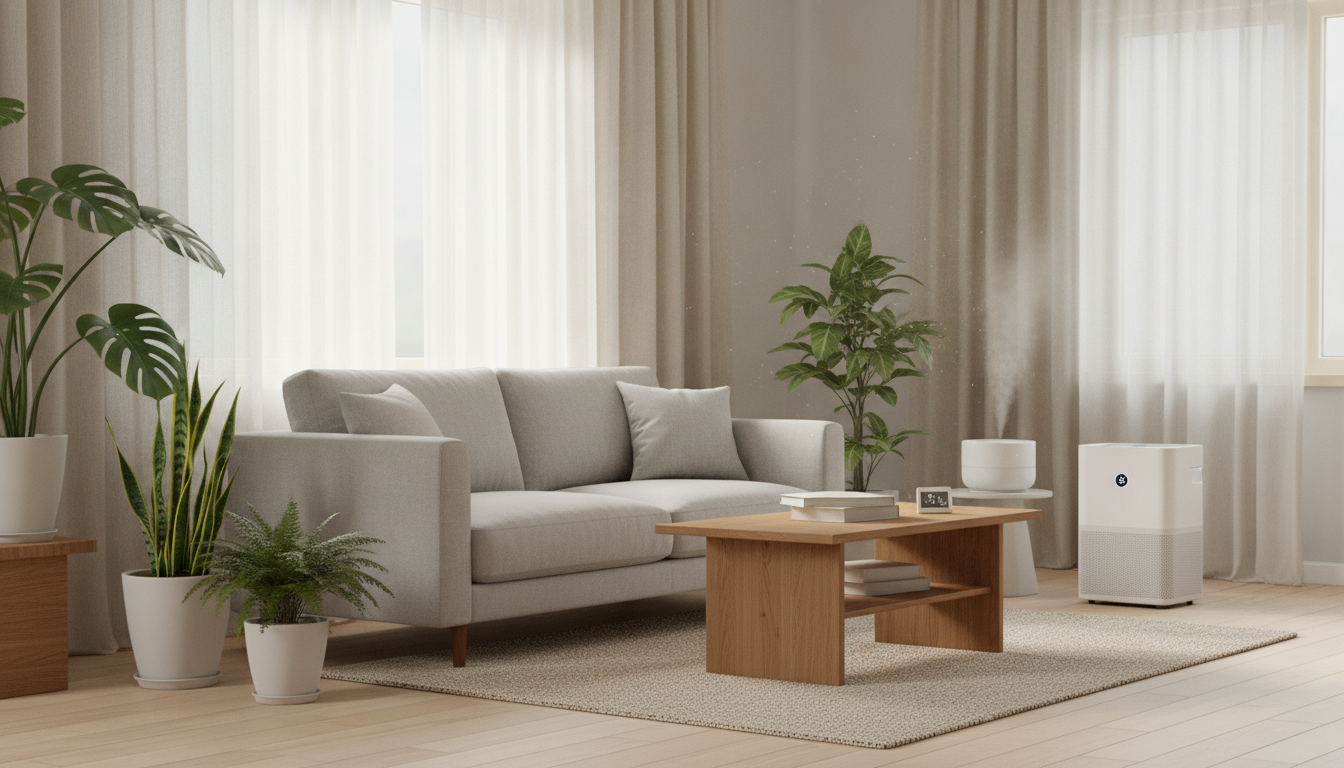
Breathe Better Indoors, Live Better: A Practical Guide to Improving Indoor Air Quality
Indoor air can carry dust, moisture, gases, and tiny particles that affect comfort, sleep, and respiratory health. The good news: a few targeted changes—source control, ventilation, filtration, and smarter cleaning—can noticeably reduce irritants and keep your home feeling fresher day to day. If you want a simple, step-by-step routine you can stick with, start with the basics below and build toward a repeatable plan.
What Shapes Indoor Air Quality
Indoor air quality (IAQ) is influenced by a mix of what gets released into the air and how quickly your home removes or dilutes it:
- Particles: Dust, pollen, pet dander, smoke, and fine particulate matter that can linger and travel room to room.
- Gases and vapors: VOCs from paints, cleaners, fragrances, and off-gassing furnishings—often noticed as “new” odors or irritation.
- Moisture and microbes: Humidity that supports mold and dust mites, plus biological allergens.
- Combustion byproducts: Cooking emissions, candles, fireplaces, and poorly vented appliances.
For a deeper, structured walkthrough you can follow week by week, see Breathe Better Indoors, Live Better: A Practical Guide to Improving Indoor Air Quality.
Quick Home Check: Find the Biggest Contributors First
Before buying anything or doing a major overhaul, identify the “top offenders” in your home:
- Track timing: Note when symptoms or odors show up most—mornings, after cleaning, during cooking, or after bringing in new items.
- Look for visible clues: Condensation on windows, musty smells, mold spotting, dusty returns, and lingering cooking odors are all high-signal indicators.
- Focus on high-impact rooms: Bedrooms (long sleep exposure), kitchens (combustion and particles), and basements (humidity) often drive the biggest gains.
- Use simple tools: A basic hygrometer helps you manage humidity; an optional air quality monitor can reveal trends for PM2.5 and VOC spikes.
| Issue | Likely signs | Fast check | First fix to try |
|---|---|---|---|
| High humidity | Condensation, musty smell, mold spots | Measure RH; inspect bathroom/basement corners | Run exhaust fans; dehumidify to a comfortable range |
| Cooking particles | Greasy film, lingering odors, coughing during cooking | Check if range hood vents outdoors | Use vented hood on high; cover pans; open a window briefly |
| Dust/allergens | Sneezing, itchy eyes, visible dust buildup | Inspect HVAC filter and returns | Upgrade/replace filters; vacuum with HEPA; damp-dust |
| VOCs/fragrances | Headaches, strong “new” smell, irritation | Review cleaners/air fresheners; recent renovations | Switch to low-odor products; increase ventilation during/after use |
Ventilation: Bring in Fresh Air Without Losing Comfort
Ventilation is your “dilution tool”: it replaces stale indoor air with outdoor air (when outdoor conditions are favorable).
- Use spot ventilation: Run bathroom fans during showers and for 20–30 minutes after. Use kitchen ventilation whenever you cook—especially with frying, searing, or high heat.
- Cross-ventilate efficiently: Short, focused air-outs (5–15 minutes with windows on opposite sides) often beat leaving a window cracked all day.
- Time it well: Skip ventilation during heavy smoke events or when outdoor pollution is high (for example, near rush-hour traffic corridors).
- Consider ERV/HRV systems: If your home supports it, mechanical ventilation can provide consistent fresh air with better temperature and humidity control.
For background on why ventilation and source control matter, the U.S. EPA’s overview is a solid reference: Introduction to Indoor Air Quality.
Filtration and Air Cleaning: What Actually Helps
Filtration works best when it’s paired with better habits—because no filter can “undo” constant new emissions.
- HVAC filters: Replace on schedule. Choose the highest-efficiency filter your system can handle without restricting airflow (when in doubt, confirm with your HVAC manual or technician).
- Portable air purifiers: Size to the room and prioritize true HEPA filtration for particle reduction. A purifier can be especially helpful in bedrooms where you spend hours continuously breathing the same air.
- Placement and runtime: Keep airflow unobstructed and run units continuously in the rooms that matter most (sleeping areas and main living spaces).
- Avoid ozone-generating devices: Some “air cleaners” intentionally produce ozone, which can irritate the respiratory system.
Moisture Control: Keep Mold and Dust Mites in Check
For practical mold basics and health considerations, see the CDC’s overview: Mold (General Information).
Low-Emission Cleaning and Lifestyle Habits
If you’re looking for a lower-fume indoor activity that doesn’t involve paints or solvents, consider hands-on, minimal-emission hobbies like DIY Wooden Bloom Box 3D Puzzle Kit.
Room-by-Room Action Plan
Bedroom
Kitchen
Living room
Bathroom and basement
A Practical Guide to Keep Progress Going
- Use a weekly checklist: Check filters, do a quick damp-dust, and ventilate during high-emission activities (cooking, cleaning, projects).
- Track what works: Note humidity readings, odor events, and when symptoms improve—patterns often point to the real source.
- Build a seasonal rhythm: Increase filtration during allergy season, monitor humidity in winter, and dehumidify in summer or during rainy stretches.
- Follow a step-by-step plan: For clear priorities and routines you can maintain, use Breathe Better Indoors, Live Better: A Practical Guide to Improving Indoor Air Quality.
FAQ
What is the fastest way to improve indoor air quality in one day?
Start with source control and ventilation: run kitchen and bath fans, do a short cross-ventilation when outdoor air is clean, replace or upgrade your HVAC filter, and run a correctly sized HEPA purifier in the room you use most.
Do air purifiers help with allergies and pet dander?
Yes—purifiers with true HEPA filtration can reduce airborne particles like pollen and pet dander. Results improve when the unit is sized correctly, run continuously, and paired with vacuuming and regular laundering.
What humidity level helps prevent mold indoors?
A moderate indoor humidity level is best; consistently high humidity increases mold risk. Measure with a hygrometer and use exhaust fans, dehumidifiers, and leak fixes to keep moisture from lingering.















Leave a comment