Used Motor Oil Disposal Checklist: Store, Transport, Recycle
Safe Motor Oil Disposal Checklist: Simple Steps to Handle Used Oil the Right Way
Used motor oil is a common DIY byproduct that can contaminate soil and water when handled carelessly. A clear checklist makes it easier to store, transport, and drop off used oil and filters safely—without spills, fumes, or confusion about what a collection site will accept. For more guidance, see Guidelines for Used Oil Collection Tanks – NJDEP.
Why used motor oil needs special handling
Once oil has circulated through an engine, it’s no longer “just oil.” It can carry contaminants and becomes a regulated recycling material in many communities. For further reading, see Used oil management.
- Used oil can contain contaminants (metal particles, fuel, solvents) that increase environmental and health risks.
- Pouring oil onto the ground, into storm drains, or into household trash can pollute waterways and may be illegal locally.
- Recycling used motor oil supports re-refining and energy recovery when processed by approved facilities.
For additional guidance on best practices and regulations, review the U.S. Environmental Protection Agency (EPA) — Used Oil Management and consumer drop-off tips from Earth911.
What to gather before the oil change
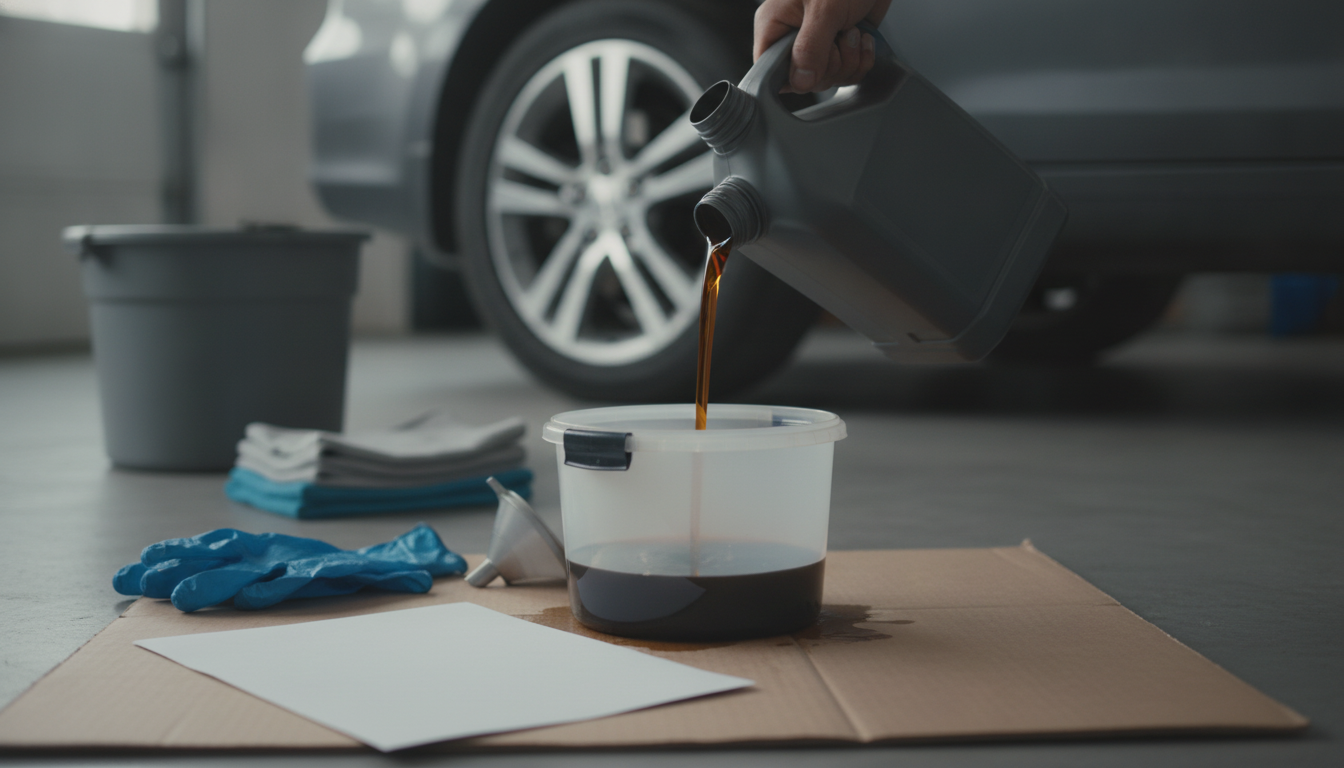
Spills usually happen when the right gear isn’t within reach. Set up your supplies first, then start draining.
- A drain pan with enough capacity for the vehicle’s oil volume.
- A tight-sealing container for storage (original oil jug or an approved, clean HDPE container).
- Nitrile gloves, shop towels, and a small funnel to reduce splashes.
- A sealable bag or container for the used oil filter (some locations accept filters separately).
- Absorbent material (cat litter, oil absorbent, or pads) for spill control.
Quick prep checklist
| Item | Purpose | Tips |
|---|---|---|
| Drain pan | Catch oil cleanly | Use a pan with a spout to pour into containers |
| Funnel | Transfer without spills | Wipe funnel after use and store in a bag |
| Sealable oil container | Safe storage and transport | Label it “Used Motor Oil” and keep cap tight |
| Gloves & towels | Protect skin and clean drips | Keep a trash bag nearby for oily towels |
| Absorbent | Handle accidental spills | Sweep up promptly; bag and dispose per local rules |
If you prefer a one-page routine you can reuse every oil change, consider a printable reference like Safe Motor Oil Disposal Checklist (Printable Digital Download).
Step-by-step: safe collection and transfer
- Cool the engine to a safe temperature. Warm oil drains faster, but avoid working around a hot exhaust or oil pan that can burn skin.
- Set the drain pan before loosening the plug. The first stream often shoots outward; place the pan slightly behind the drain plug opening to catch the angle.
- Keep used oil “clean” for recycling. Do not mix with coolant, brake fluid, gasoline, solvents, or water. Mixed fluids are commonly rejected and can complicate processing.
- Transfer carefully into a sealed container. Use a funnel, pour slowly, and pause if the drain pan glugs. Wipe the container exterior so it won’t feel slippery during transport.
- Label and stage it upright. Mark the container “Used Motor Oil,” date it if helpful, and store it upright in a secondary tray or bucket to catch drips.
Used oil filters and oily rags: what to do
Filters and cleanup materials can carry significant residue. Handling them correctly helps prevent leaks in your vehicle and avoids surprises at the drop-off site.
- Allow the oil filter to drain into the pan for several hours (or overnight) if possible.
- Place drained filters in a sealable bag or leakproof container for transport.
- Call the drop-off site to confirm whether filters are accepted and whether they must be drained.
- Oily rags and absorbents may be considered household hazardous waste in some areas; follow local guidance for disposal.
Tip for a cleaner garage routine: keep a dedicated “oil change tote” (gloves, funnel, labels, absorbent, and bags) so you’re not hunting for supplies with oily hands. If you like hands-on projects, the DIY Wooden Bloom Box 3D Puzzle Kit is also an easy, no-mess build for downtime while a filter drips out.
Where to take used motor oil
Most communities have at least one responsible option—auto retailers, repair shops, or municipal programs—but the rules vary widely. Confirm details before loading up your car.
Drop-off site call-ahead questions
| Question | Why it matters |
|---|---|
| What is the maximum volume accepted per visit? | Prevents being turned away if bringing multiple jugs |
| Do you accept used oil filters? | Some sites accept oil only; others take filters separately |
| Are there container requirements? | Some sites require sealed, non-glass containers |
| What fluids are not allowed? | Mixed fluids can contaminate recycling streams |
| What are the drop-off hours and procedure? | Avoids arriving when staff or access is unavailable |
Safe transport and storage tips
Spill response: quick, practical steps
Printable checklist option for repeatable, mess-free routines
For a ready-to-use version that’s easy to keep in your glove box or garage binder, see Safe Motor Oil Disposal Checklist (Printable Digital Download).
FAQ
Can used motor oil be mixed with other fluids before recycling?
No. Mixing used oil with coolant, brake fluid, solvents, gasoline, or water can make it non-recyclable and may cause a collection site to reject it. Keep each fluid in a separate, clearly labeled container.
What container is safest for storing and transporting used motor oil?
Use a clean, leakproof, sealed plastic container such as the original oil jug or an approved HDPE container. Keep it upright inside a secondary tray or bucket, and avoid food containers and glass.
Do oil filters need to be drained before drop-off?
Requirements vary by location, but many sites prefer (or require) drained filters. Let the filter drip into the drain pan for several hours when possible, then call ahead to confirm the site’s rules.















Leave a comment