Chanel’s Pop Culture Power: Codes, Icons, and Media

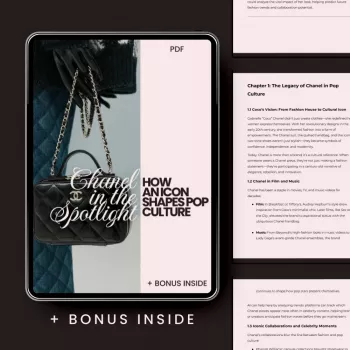
Chanel in the Spotlight: How an Icon Shapes Pop Culture
Chanel’s influence reaches far beyond the runway: it has shaped how modern women dress, how luxury is photographed, and how style signals status on screen. From the little black dress and tweed suiting to the interlocking “CC” as a cultural shorthand, Chanel’s codes have been repeated, remixed, and debated across film, music, magazines, and social media. This guide maps the key moments, media images, and brand signatures that turned Chanel into a lasting pop-cultural reference point—and why those symbols still carry power today. For more guidance, see Gabrielle “Coco” Chanel (1883–1971) and the House of ….
The Foundations: Coco Chanel and the Modern Wardrobe
Chanel emerged at a time when women’s lives were rapidly changing: work, travel, sport, and public life demanded clothing that moved with the body instead of fighting it. That broader shift—toward ease, speed, and modernity—created the perfect conditions for a designer whose instincts ran toward simplicity. For further reading, see How Coco Chanel Shaped Fashion History.
At the core of Gabrielle “Coco” Chanel’s approach was a refusal of restrictive ornamentation. Instead of treating comfort as a compromise, she treated it as a form of elegance. Simplified silhouettes, practical fabrics, and clean lines weren’t only wearable—they were visually decisive. The look read clearly from a distance, which mattered as photography and mass print culture grew more powerful.
Several breakthroughs became foundational to the Chanel vocabulary: jersey promoted from undergarment fabric to daywear; cardigan jackets that balanced structure with ease; straight skirts that signaled movement over display; nautical cues that felt sporty rather than precious; and costume jewelry used as a bold choice rather than a last-minute accessory. Together, these choices created a cleaner, more graphic wardrobe—easy to photograph, easy to reproduce, and easy to recognize.
Chanel Codes That Became Pop-Culture Symbols
“Chanel” in pop culture often means more than one outfit. It can be a single code—an instantly readable detail—dropped into a scene to signal taste, money, confidence, or a certain kind of Paris-inflected polish.
The little black dress became a template because it’s adaptable: minimalism that survives every decade’s styling swings. Tweed and the Chanel-style jacket silhouette function like a uniform, communicating authority without harshness. Details like quilting, chains, pearls, camellias, and two-tone shoes remain legible even when detached from the full look—perfect for close-ups, street-style shots, and social posts where a quick visual hit matters.
And then there’s the logo. In modern celebrity culture, the interlocking “CC” operates as shorthand: a split-second cue for luxury and aspiration. This is why “codes” matter. Consistent symbols allow fashion to work like a language across magazines, film costuming, and everyday street style—where the audience may not know the season, but they know what the sign is saying.
| Chanel code | How it’s typically styled in media | What it signals to audiences |
|---|---|---|
| Tweed jacket | Paired with denim, mini skirts, or monochrome tailoring | Effortless authority; classic taste |
| Little black dress | Clean lines, minimal jewelry, strong lipstick or sleek hair | Timeless sophistication; confidence |
| Quilted bag + chain strap | Close-up accessory shots; carried in nightlife scenes | Status; nightlife glamour |
| Pearls | Layered with casual basics or worn as a focal point | Refined femininity; heritage |
| Interlocking “CC” | Prominent placement on accessories; paparazzi framing | Instant brand recognition; luxury shorthand |
From Haute Couture to Hollywood: Chanel in Film and Celebrity Style
Cinema and celebrity accelerated Chanel’s mythology by turning clothing into narrative. A costume isn’t only something a character wears—it’s a shortcut to personality, power, and social standing. In that context, Chanel’s clarity becomes extremely useful: the camera catches the structure of a jacket, the gleam of a chain strap, the restraint of a black dress, and the message lands fast.
Fashion Media and the Chanel Image Machine
Chanel’s Cultural Debates: Class, Appropriation, and the Price of a Symbol
A Reading Map: What to Look For When Studying Chanel in Pop Culture
Shop the Story: Style Pieces That Echo the Chanel Conversation
For a deeper, scene-by-scene way to connect fashion history to media moments, explore Chanel in the Spotlight: How an Icon Shapes Pop Culture – A Guide to Chanel’s Legacy in Fashion & Media. If your wardrobe leans toward statement textiles and editorial color, Etro High-Waisted Silk Floral Pants offer a different kind of luxury signal—one that still reads strongly on camera through print, pattern, and movement.
FAQ
What made Chanel such a lasting influence in fashion and pop culture?
Chanel built a consistent set of design codes—clean silhouettes, distinctive textures, and recognizable accessories—that reproduce well in photography and film. Decades of editorial storytelling and celebrity visibility kept those codes circulating until they became cultural shorthand.
What are the easiest Chanel elements to recognize in movies, music videos, and photos?
High-signal Chanel markers include the tweed jacket, the little black dress, a quilted bag with a chain strap, pearls, camellias, and the interlocking “CC.” They stand out because they’re visually distinct in close-ups and still readable at a distance.
How has Chanel’s image changed in the social media era?
Short-form video and influencer amplification have made quick identifiers—logos, accessories, and strong textures—travel faster than full runway narratives. Runway spectacle now gets repackaged into clips and behind-the-scenes moments that keep the Chanel “world” continuously visible between seasons.













Leave a comment