10-Minute RF Sweep: Find Active Spy Signals Fast
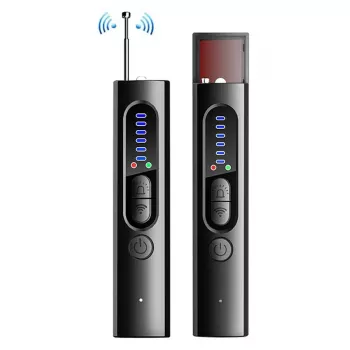
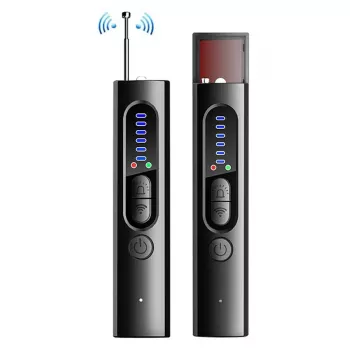
Wireless RF Signal Detector: A Practical Tool for Finding Active Spy Signals
Privacy checks don’t need to be complicated. A compact RF signal detector can help scan for active wireless transmissions commonly used by hidden cameras, listening devices, or GPS trackers. Instead of guessing where a device might be, you can look for changes in radio-frequency activity as you move through a room or around a vehicle—then focus your physical inspection where the readings spike.
This guide covers what an RF detector can uncover, when it’s most useful (and when it’s not), how to do a quick 10-minute sweep, and how to interpret results without chasing false alarms.
What this detector helps uncover
An RF signal detector doesn’t “see” cameras or trackers directly. What it can do is detect the presence of radio-frequency activity that may indicate a transmitting device nearby. That makes it especially helpful when a hidden device is actively sending data—like a Wi‑Fi camera streaming, a cellular (GSM/LTE) tracker reporting location, or a microphone bug transmitting audio.
- Detects radio-frequency activity that may indicate a transmitting device nearby.
- Useful for spotting active wireless signals often associated with hidden cameras, audio bugs, or GPS trackers that communicate over common bands.
- Best for checking unfamiliar spaces: short-term rentals, hotel rooms, meeting rooms, dressing rooms, and vehicles.
- Helps narrow down where to physically inspect by guiding attention toward areas with stronger readings.
- Works best as part of a routine: visual inspection first, RF scan second, and verification third.
When it’s most useful (and when it isn’t)
RF detection shines when something is transmitting right now. If a device is powered off, recording locally, or “phones home” only once in a while, you may need repeated passes at different times to catch a burst of activity.
- Most useful when a device is actively transmitting (Wi‑Fi camera streaming, GSM tracker reporting, bug sending audio).
- Less useful for devices that store footage locally or transmit intermittently; repeated scans at different times can help.
- Busy RF environments (apartments, offices, downtown areas) can produce many signals; focus on sudden spikes as you move closer to an object.
- Legitimate electronics transmit too (routers, phones, smart TVs); turning off known devices can make suspicious signals easier to isolate.
- Physical concealment still matters: a detector points to signal strength, but you still need a hands-on check to confirm the source.
Common scan locations and what to look for
| Location | Why it’s checked | Practical tip |
|---|---|---|
| Hotel/rental bedroom | Cameras and microphones are often aimed toward beds and seating areas | Scan near clocks, smoke detectors, vents, and wall chargers; look for spikes near small openings |
| Bathroom | High privacy area with common hiding spots | Scan around mirrors, shelves, and decorative devices; verify anything that faces shower or vanity |
| Vehicle cabin | Trackers or transmitters can be placed for monitoring | Scan under seats, glove box area, and near OBD ports; then inspect for unfamiliar attachments |
| Vehicle exterior | Magnetic GPS trackers may be hidden underneath | Scan close to bumpers and wheel wells; use a flashlight to visually confirm |
| Office/meeting room | Sensitive conversations and screens may be targeted | Temporarily silence or move phones away; scan near conference phones, power strips, and ceiling fixtures |
How to use it in a quick 10-minute privacy sweep
A fast sweep works best when you combine common-sense visual checks with a methodical RF scan. The goal is not just “detecting a signal,” but narrowing down a repeatable hotspot you can confirm by unplugging or moving a suspected object.
Interpreting results without false alarms
For more context on real-world surveillance risks and noisy signal environments, these references are helpful: Electronic Frontier Foundation: Surveillance Self-Defense, FCC Consumer Guide (Understanding RF Environments), and FTC Consumer Advice.
Everyday scenarios where it fits well
Product details and what to expect from day one
The Wireless RF Signal Detector – Anti Spy Camera & GPS Tracker Finder is designed for portable, on-the-go scanning and quick checks in unfamiliar spaces. The best results come from slow movement, repeated passes, and reducing nearby known transmitters before you scan.
If you’re building a small travel-ready kit, a couple of other in-stock items that pack easily include the DIY Wooden Bloom Box 3D Puzzle Kit (a compact downtime activity for long trips) and the Painless Whole Body Epilator for Home Use (personal care without hunting for appointments on the road).
FAQ
Can it find hidden cameras that don’t use Wi‑Fi?
It detects active radio transmissions, so a camera recording only to an SD card may not show up unless it emits RF for some other reason. Combine RF scanning with a careful visual check for lenses, pinholes, and oddly placed “everyday” objects.
Why does it show activity almost everywhere in a city or apartment building?
Dense areas have many legitimate signals from routers, phones, smart devices, and building systems. Turn off or isolate your own devices when possible, scan for sharp spikes as you move closer to objects, and repeat from different angles to find a consistent hotspot.
Will it detect a GPS tracker on a car?
It can help if the tracker is actively transmitting (such as cellular reporting), but some trackers transmit intermittently, so repeated scans may be necessary. Follow up with a physical search under the vehicle, around wheel wells and bumpers, and near the OBD port (using safe inspection practices).













Leave a comment