15-Bar Espresso & Steam Wand Guide for Home Lattes
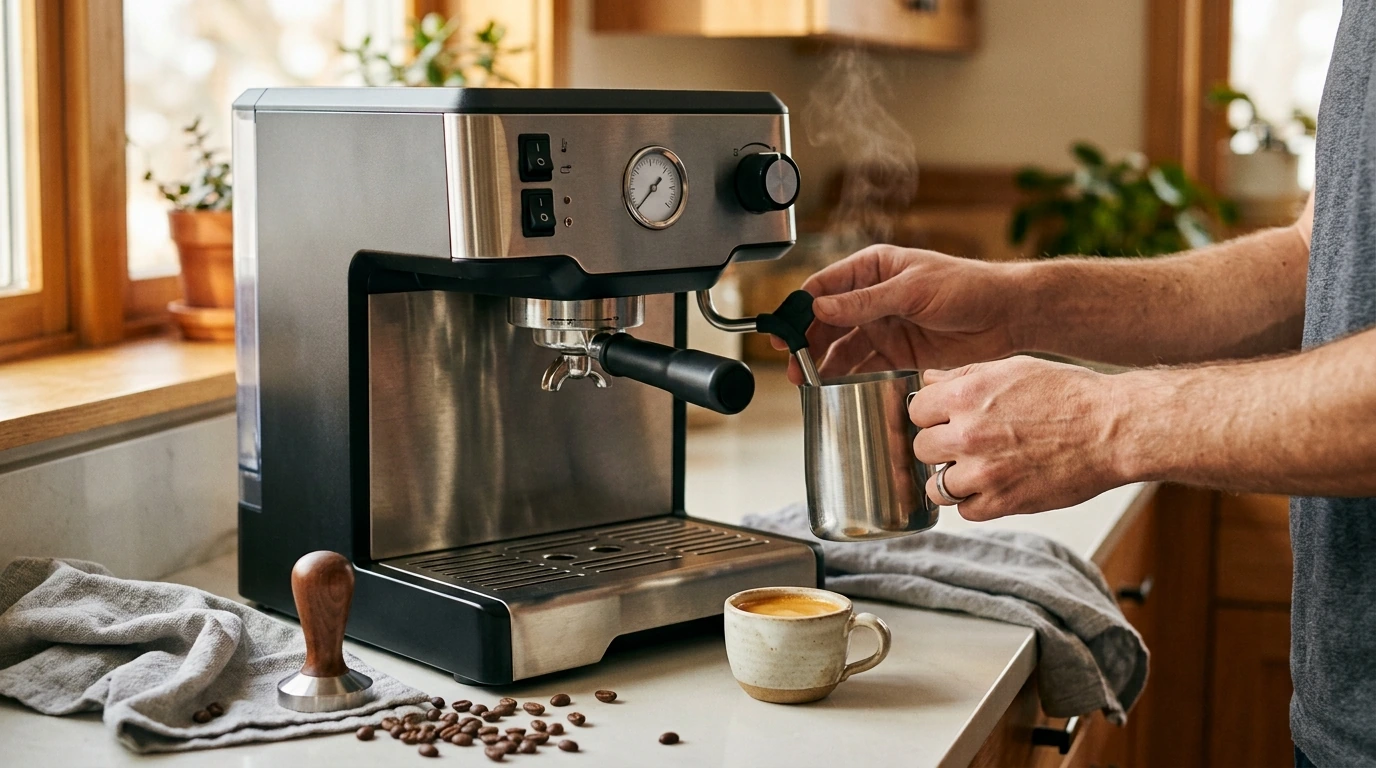
15-Bar Espresso Machine with Milk Frother & Steam Wand: Café-Style Drinks at Home
A bar-style espresso machine with a steam wand is built for bold espresso shots and milk-based drinks like cappuccinos and lattes. With a 15-bar pump rating and an integrated milk frother/steam wand, the goal is simple: produce rich espresso, then texture milk into smooth microfoam for drinks that taste and feel like they came from a coffee bar. Below is a practical guide to what a 15-bar setup can do, how to steam milk with better consistency, and how to keep your machine performing day after day.
What a Bar-Style Espresso Machine Is Designed to Do
Espresso machines are purpose-built for one job: extracting concentrated coffee by forcing hot water through finely ground coffee under pressure. That brewing style creates intensity, body, and the crema layer many people associate with a “true espresso” look.
- Brew concentrated espresso: Hot water moves through a compact coffee puck, producing a small, strong shot.
- Support milk-based drinks: An integrated milk frother/steam wand heats milk and adds texture, making cappuccinos and lattes possible without extra gadgets.
- Fit a home workflow: Compared with manual-only methods, a bar-style machine aims for faster warm-up, repeatable shots, and easier cleanup.
- Reward technique: Fresh coffee, a consistent grind, the right dose, and a level tamp matter as much as the machine itself.
If you’re shopping for a machine in this category, the 15-Bar Espresso Machine with Milk Frother & Steam Wand is designed specifically for the espresso + steamed milk routine, so you can move from pulling a shot to frothing milk without switching tools.
Understanding 15-Bar Pressure (What Matters and What Doesn’t)
The “15-bar” headline can be confusing. It usually describes the pump’s maximum capability, not the exact pressure applied throughout extraction. Once water begins flowing through coffee, the system pressure at the puck typically settles lower than that maximum rating.
- Pump rating vs. brewing pressure: The label is a capacity indicator, not a guarantee that “more bars = better espresso.”
- Stability beats hype: Consistent water temperature, even puck preparation, and grind control generally have a bigger impact on taste than the bar number on the box.
- Signs of good extraction: Look for a steady, even flow (not sputtering), balanced flavor (not sharply sour or harshly bitter), and a crema that’s uniform rather than pale and thin.
- Fast shots: Grind finer, increase dose slightly, or tamp more evenly.
- Slow shots: Grind coarser or reduce dose a touch.
For more fundamentals on brewing and coffee basics, the National Coffee Association’s brewing guidance is a helpful reference point for dialing in taste with practical adjustments.
Milk Frother Steam Wand Basics: From Hot Milk to Microfoam
Steaming milk well is less about “making foam” and more about controlling texture. The best milk for lattes is glossy and integrated—microfoam—so the drink tastes sweet, feels silky, and pours smoothly.
If you’re building a consistent routine, you’ll get better results by focusing on the whirlpool (texture) more than the amount of air (volume). For technique research and standards across the coffee industry, browse the Specialty Coffee Association’s research.
Drinks You Can Make (and What to Aim For)
Quick Start Workflow for Better Espresso at Home
Care, Cleaning, and Longevity
For general home food-safety cleaning principles (useful for thinking about milk-contact surfaces), see the U.S. FDA’s home food safety guidance.
Common Issues and Fast Fixes
Snapshot: What to Check Before Buying
| Feature to evaluate | Why it matters | What to look for |
|---|---|---|
| Pressure and extraction consistency | Balanced flavor and repeatable shots | Even flow, stable performance after warm-up |
| Steam wand performance | Microfoam quality for lattes/cappuccinos | Strong, steady steam; easy positioning; quick cleanup |
| Temperature management | Reduces sour shots and improves milk sweetness | Adequate warm-up; consistent brewing and steaming |
| Cleaning and descaling routine | Prevents clogs, off-flavors, and weak steam | Clear instructions; easy-to-clean wand and removable areas |
| Counter fit and usability | Daily convenience and fewer messes | Accessible water/drip tray; comfortable controls |
Shop In-Stock Picks
- 15-Bar Espresso Machine with Milk Frother & Steam Wand
- DIY Wooden Bloom Box 3D Puzzle Kit
- Painless Whole Body Epilator for Home Use
FAQ
How do you froth milk with a steam wand for a latte?
Start with cold milk in a metal pitcher, purge the wand, and place the tip just under the surface to introduce a small amount of air. Then sink the tip slightly to create a rolling whirlpool that turns the milk glossy; stop before overheating and pour right away.
Why is my espresso coming out watery or too fast?
This is usually caused by a grind that’s too coarse, too little coffee in the basket, uneven distribution, or a non-level tamp. Adjust to a finer grind, dose consistently, and tamp evenly after the machine is fully warmed up.
How often should an espresso machine be descaled?
It depends on your water hardness and how often you use the machine. Follow the manufacturer’s schedule, and consider filtered water to slow scale buildup.














Leave a comment