27mm F2.8 on Sony APS-C: The “Just Right” Prime

27mm F2.8 on Sony APS-C: A Small Prime That Feels “Just Right”
A compact 27mm F2.8 autofocus prime can be an easy “leave-it-on” lens for Sony APS-C mirrorless cameras. It keeps your kit light while giving a natural-looking perspective that works for everyday scenes—street walks, travel moments, casual portraits, and quick indoor snapshots. Below is what this focal length looks like on APS-C, what to check before buying, and how to get the best results in real-world shooting. For more guidance, see Sony FE 28-70mm F3.5-5.6 review.
What 27mm Looks Like on Sony APS-C
Sony APS-C cameras use a sensor that’s smaller than full frame, so the field of view is tighter. With a crop factor of about 1.5×, a 27mm lens behaves like roughly a 40mm equivalent view. That “in-between” perspective is a big reason people like it: wider than a normal 50mm equivalent, but not as wide as a 35mm equivalent. For further reading, see List of third-party Sony E-mount lenses.
The look is often described as natural. Straight lines are generally easier to keep looking straight compared with wider lenses, and faces won’t get the exaggerated perspective you can see when shooting too close with ultra-wide focal lengths. Framing also feels intuitive: you can capture a subject plus some surroundings without the scene looking stretched.
Where it shines: street walkarounds, travel details, indoor family moments, food and tabletop photos, and casual portraits where you want a bit of context. Where it’s less ideal: tight headshots (you’ll need to get close, which changes perspective) and distant subjects (there isn’t much reach).
Focal length feel on Sony APS-C (quick comparison)
| Lens focal length | Approx. full-frame equivalent | Best for | Typical trade-offs |
|---|---|---|---|
| 27mm | ~40mm | Everyday scenes, street, travel, environmental portraits | Not long enough for distant subjects; not ultra-wide for tight interiors |
| 23–24mm | ~35mm | Wider street, interiors, landscapes | More edge stretching up close; can feel wide for portraits |
| 35mm | ~50mm | General purpose, portraits with less background | Harder indoors; less context in frame |
| 50mm | ~75mm | Head-and-shoulders portraits | Often too tight indoors; needs more working distance |
Key Specs and Handling to Check Before Buying
Mount compatibility (E-mount and APS-C coverage)
Start with the basics: confirm the lens is Sony E-mount and intended for APS-C coverage (or full-frame coverage if you also plan to use it on full-frame bodies later). Sony E-mount is shared across Sony’s APS-C and full-frame mirrorless cameras, but coverage and performance can vary by lens design. For a general overview of the mount, see Sony E-mount.
F2.8 aperture (what it really means)
F2.8 is bright enough for many indoor and evening situations, especially with modern high-ISO APS-C bodies. For background blur, expect moderate separation—most noticeable when your subject is close and the background is farther away. It won’t mimic the look of a faster F1.8 prime, but it can still produce pleasing, natural depth.
Autofocus behavior (speed, accuracy, low light)
Autofocus performance depends on both the lens motor and your camera body’s AF system. Newer bodies tend to track subjects more confidently and offer more advanced face/eye detection options. For help with camera settings and general guidance, Sony’s support resources can be useful: Sony Support – Interchangeable lens camera help.
Minimum focus distance and close-up usefulness
Close-focus ability matters more than most people expect with a 40mm-equivalent view. A short minimum focus distance makes a 27mm prime more versatile for food, product photos, small objects, and travel details—without needing a dedicated macro lens.
Ergonomics for daily carry
Image Quality: What to Expect from a Small F2.8 Prime
Sharpness (center vs. corners)
Bokeh and rendering
Distortion, vignetting, and corrections
Flare and contrast
Best Use Cases (and Settings That Tend to Work)
Street and travel
Indoor everyday moments
Environmental portraits
Food and details
Simple video clips
Fit With Popular Sony APS-C Bodies
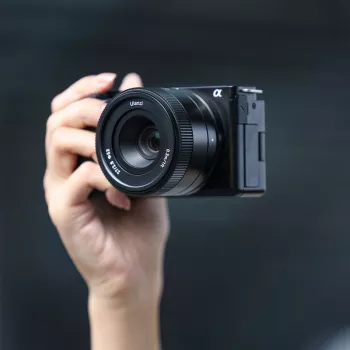
Product Spotlight: 27mm F2.8 Auto Focus Lens for Sony Mirrorless APS-C Cameras
If you want an affordable, compact autofocus prime with a natural everyday field of view, the 27mm F2.8 Auto Focus Lens for Sony Mirrorless APS-C Cameras is designed for exactly that role. The main promise is simple: small size, a straightforward F2.8 aperture, and autofocus convenience for daily shooting.
At-a-glance purchase details
| Item | Details |
|---|---|
| Product | 27mm F2.8 Auto Focus Lens for Sony Mirrorless APS-C Cameras |
| Price | $63.17 USD |
| Availability | In stock |
| Product page | View product |
More In-Stock Picks (Popular Right Now)
- Professional 1875W Hair Dryer with Negative Ions & Brushless Motor for Fast Drying
- Interactive Soccer Table Game for Kids
FAQ
Is 27mm a good everyday focal length on Sony APS-C?
Yes—on APS-C it’s about a 40mm equivalent view, which often feels natural for daily scenes and travel. If you want wider interiors and landscapes, a ~35mm-equivalent lens may fit better; if you prefer tighter portraits, a ~50mm-equivalent option can be easier.
Will an autofocus lens work on any Sony E-mount APS-C camera?
Most Sony APS-C mirrorless cameras share the E-mount, so mounting is typically compatible. Autofocus features and tracking performance can vary by camera model, settings, and firmware, so it’s smart to confirm supported modes for your specific body.
How much background blur can an F2.8 prime give on APS-C?
Expect moderate blur that looks best at closer focusing distances and with backgrounds that are farther behind your subject. For noticeably stronger separation in the same framing, a faster aperture like F1.8 generally creates more blur.










Leave a comment